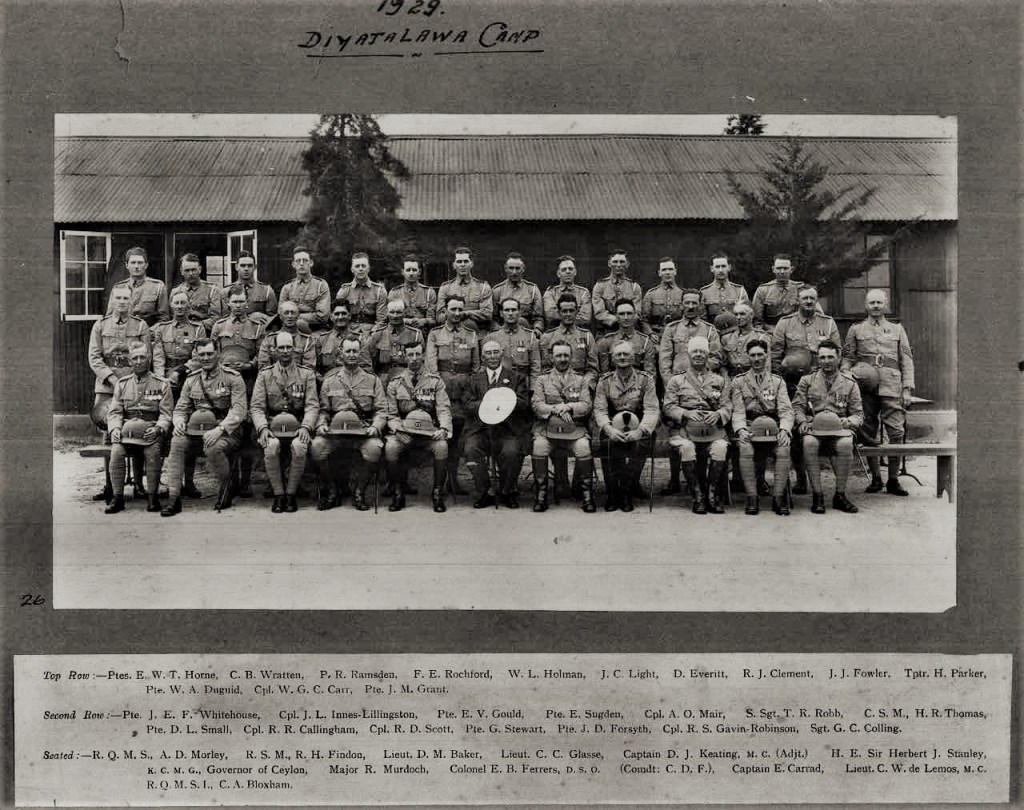
Earliest known group photo of CS&T with Governor and CDF Commandant in Diyatalawa, 1929. The CO at the time was GO Hunt.
Necessity is the mother of creation
old proverb
WW1 officially ended on November 11, 1918. The British Army Service Corps, which at its peak had 10,547 officers and 315,334 men or nearly 10% of the British Army, had played a pivotal role in WW1. The exigencies of WW1 lead to the realization by British authorities that there was a need for a permanent local military entity to supplement the work done in Ceylon by the British Army Service Corps (renamed the Royal Army Service Corps after WW1). The manpower requirements of WW1 had caused the British to withdraw the 4 Rajputs, the only permanently garrisoned infantry regiment. From that point on, the Mobilized Detachment of the CLI was continuously mobilized till the Ceylon Army came into existence as a permanent force.
In the waning months of World War 1, on April 12th 1918, the Ceylon Supply and Transport Corps was born. No doubt the impetus for its creation would have been the manpower requirements of the war, which dictated the need for a local commissariat entity. Major Oswald Tonks, a British Army Captain, was appointed as its first Commanding Officer along with 9 other British officers. The CO and all other officers were all WW1 veterans, a group that would dominate the officer corps of the new regiment till WW2.

First Commanding Officer and First Officers of Ceylon Supply & Transport Corps at formation in 1918
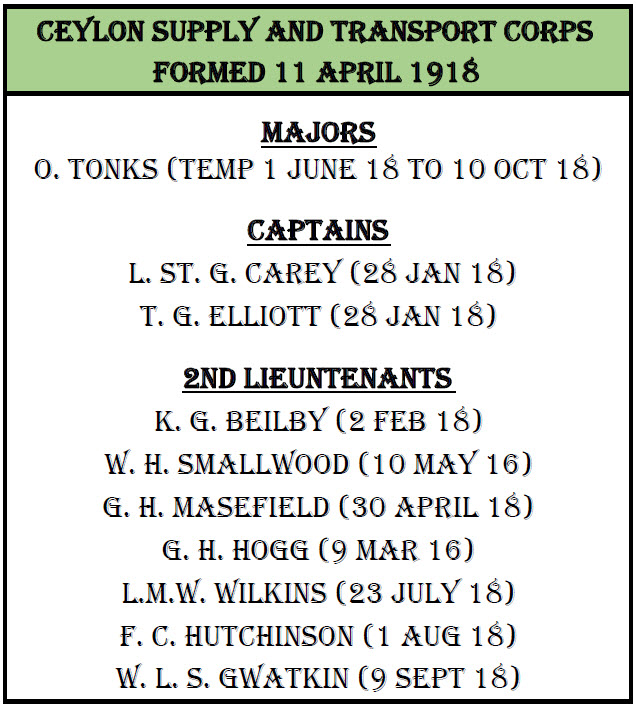
O. Tonks, the first Commanding Officer, and other officers of the newly formed regiment. Then Lt. W.L.S. Gwatkin, would succeed O. Tonks as the second CO in 1922. The dates in the table indicate when they reached their substantive rank

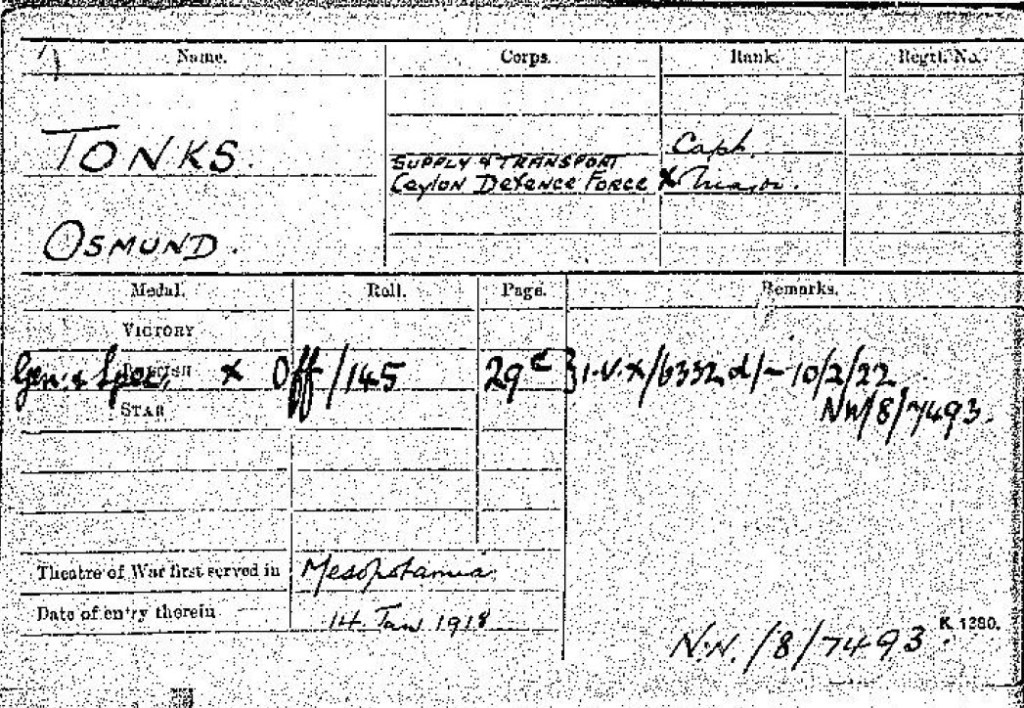
Osmund Tonks, the first Commanding Officer
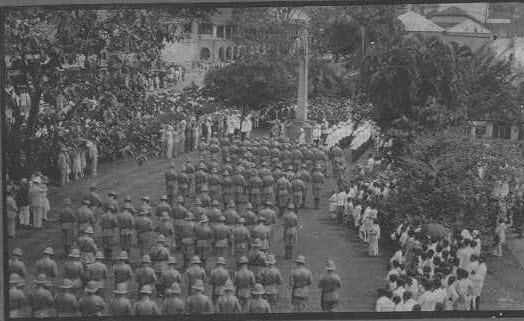
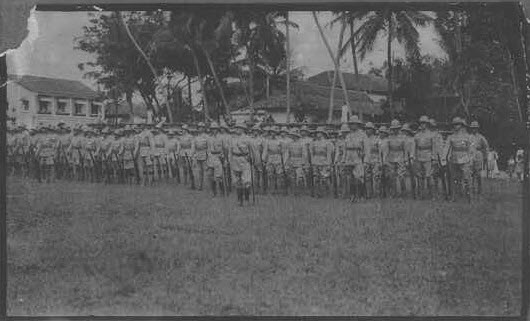
Left photo: Believed to be CASC troops at memorial service for King George V who died in 1936.
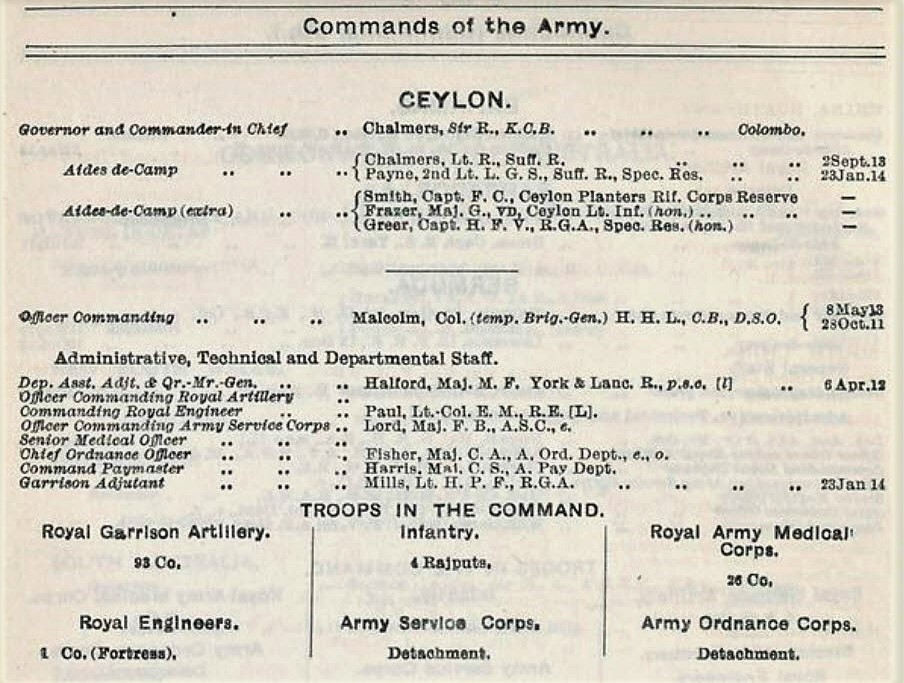
Command Structure of the British Garrison in Ceylon at the start of WW1 in 1914

The organisation of the Ceylon Defence Force in 1918 when Ceylon Supply and Transport Corps came into existence
The formation of the CS&T was a major milestone in the establishment of combined arms and supporting arms of the then Ceylon Defence Force. During its formative years in the first decade, the regiment is referred to as the commissariat corps to the Ceylon Defence Force, a label which suggests that its primary focus was on supplies and provisioning.
At the time the CS&T was formed in 1918 the Ceylon Defence Force consisted of 12 regiments, out of which 5 continue to this today.
Vehicles in Use in 1927

Profiles of Early Commanding Officers

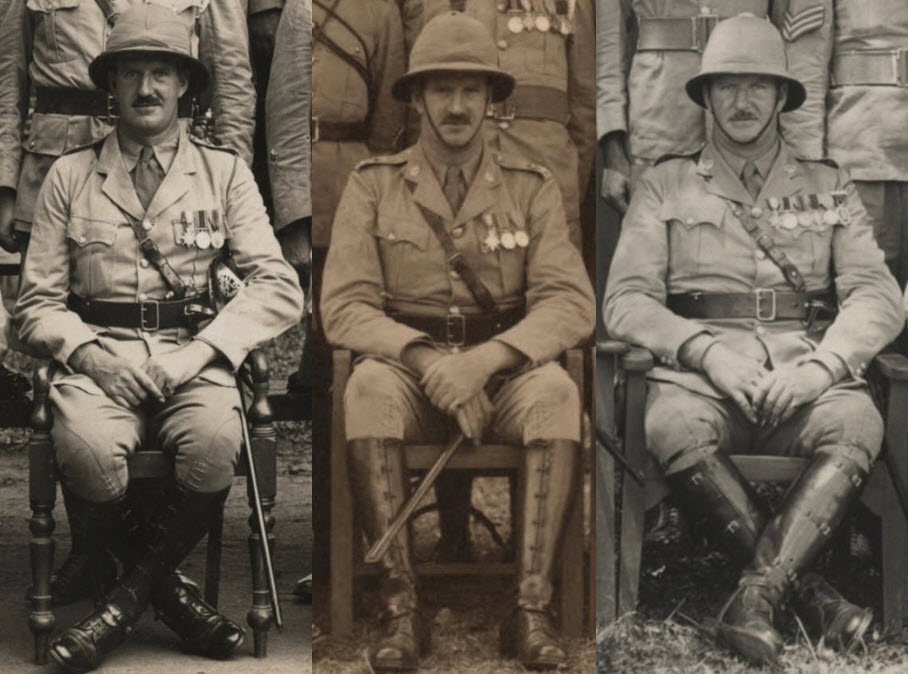
Most of the CS&T and later Ceylon Army Service Corps (CASC) Commanding Officers from inception through WW2 were WW1 veterans. Major Osmund Tonks service record indicates that he served in Mesopotamia in 1918, and received the General Service Medal in WW1. Another CO, GO Hunt (1927 to 29) served in France. CJD Lanktree (1933 to 39), who was with the Royal Munster Fusiliers in the Great War, likely saw action in the Battle of Mons. His Irish regiment had high casualties during that battle and was disbanded after the formation of the Irish Free State in 1922. Lanktree’s WW1 service record indicates that he went from 2/Lt. to Captain within the year of 1914, which was not uncommon in an era of mass casualties and rapid battle field promotions. Records in the London Gazzette indicate that many of the British officers came to the CS&T from the RASC. Often, their local rank was a single level higher than their British Army rank (e.g. O. Tonks was a British Army Captain but held the local rank of Major). Till the formation of the Ceylon Army at independence, many of the British COs came with a background in planting or in the civil service. CJD Lanktree was a member of the Ceylon Civil Service 1922 Intake and was the Director of Electrical Undertakings when he joined the CS&T in 1931. In 1939, one month after WW2 started, Lanktree would receive a promotion to full colonel and was posted to the CDF General Reserve till 1946. In 1945, he held the position of Deputy Financial Secretary of the Government of Ceylon. The last of the WW1 veterans to be CO was R. Murdoch, who was CO twice during different periods: (1931-33) and (1939-43).
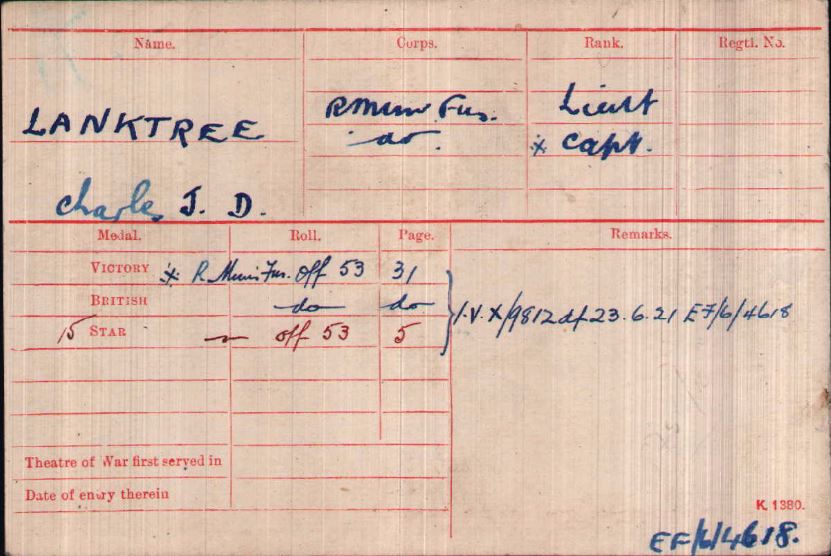
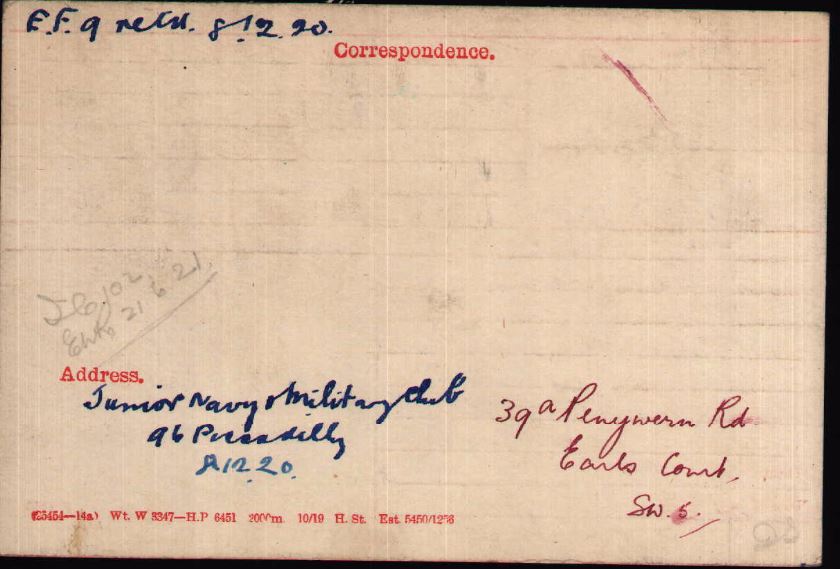
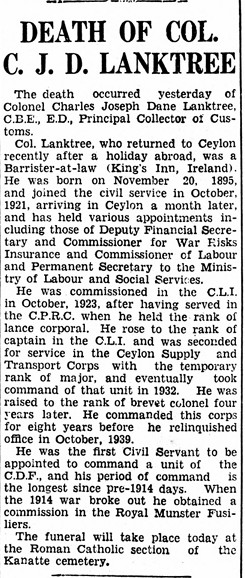
Col. Lanktree’s various Roles in the Ceylon Government
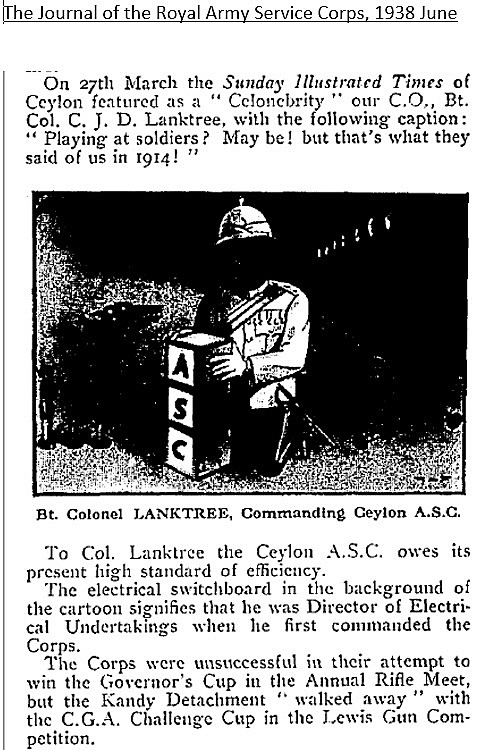

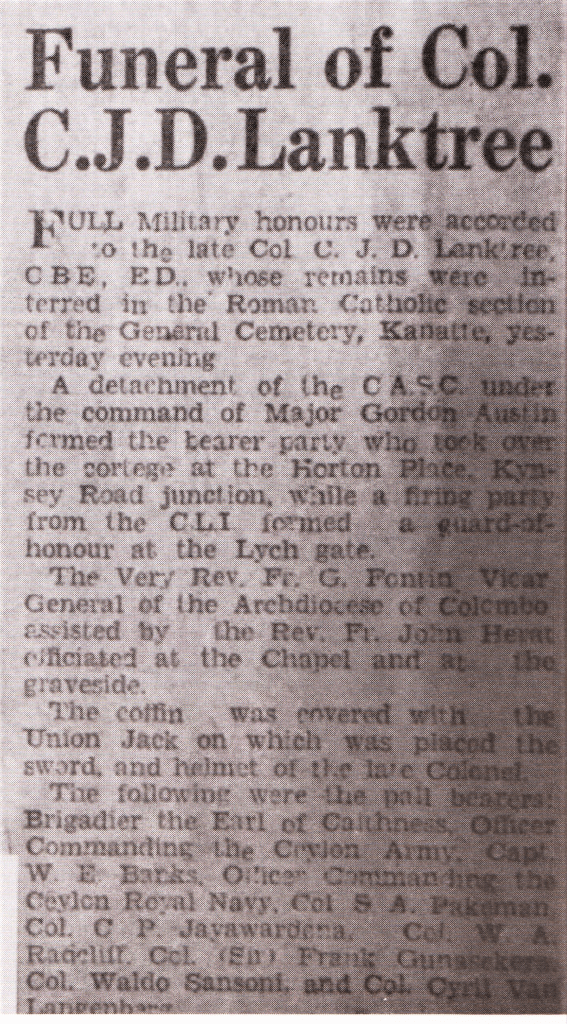
Death of Col. CJD Lanktree
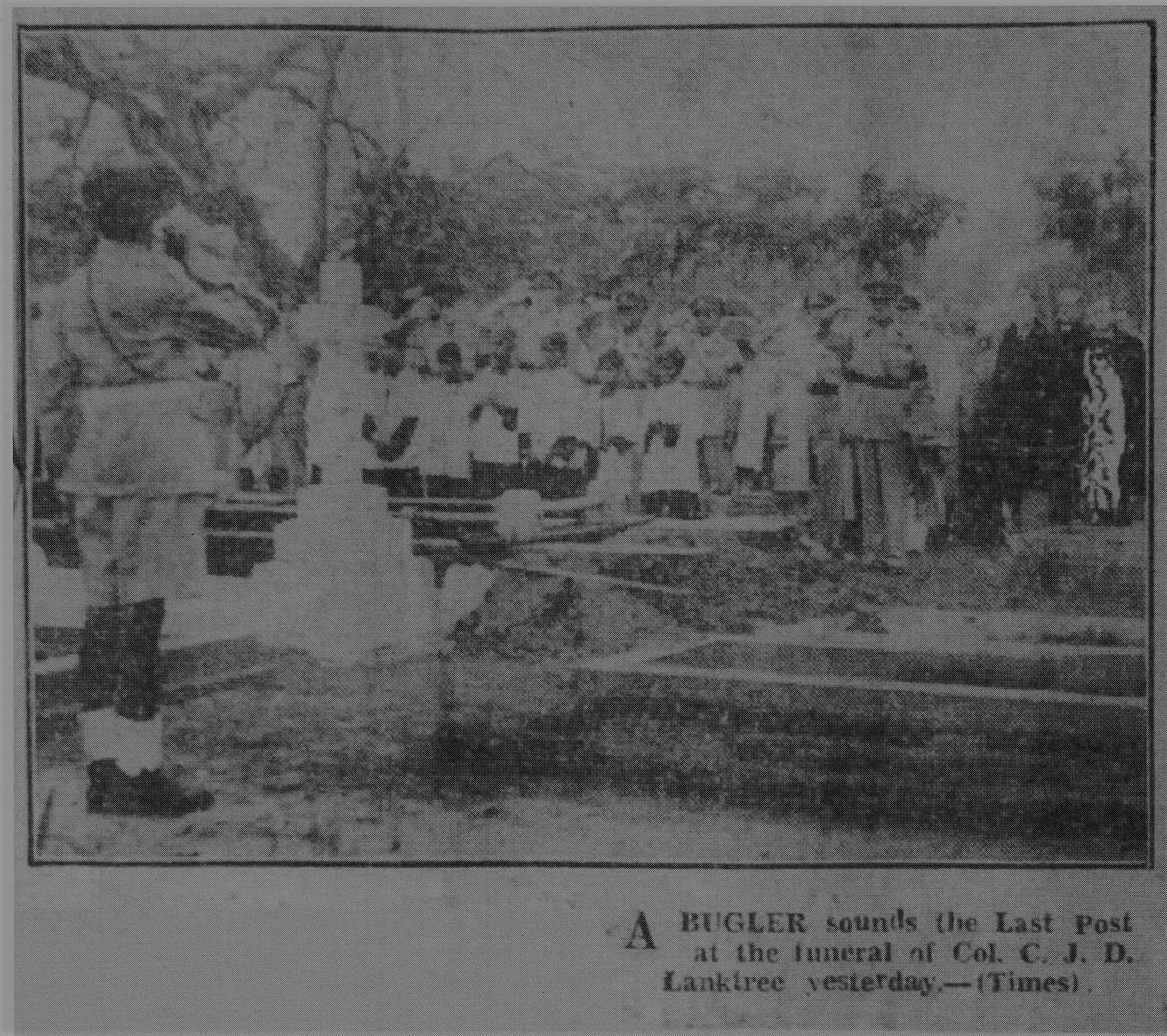
January 17, 1951: Death of Col. Lanktree
British Commanding Officers of CS&T and CASC
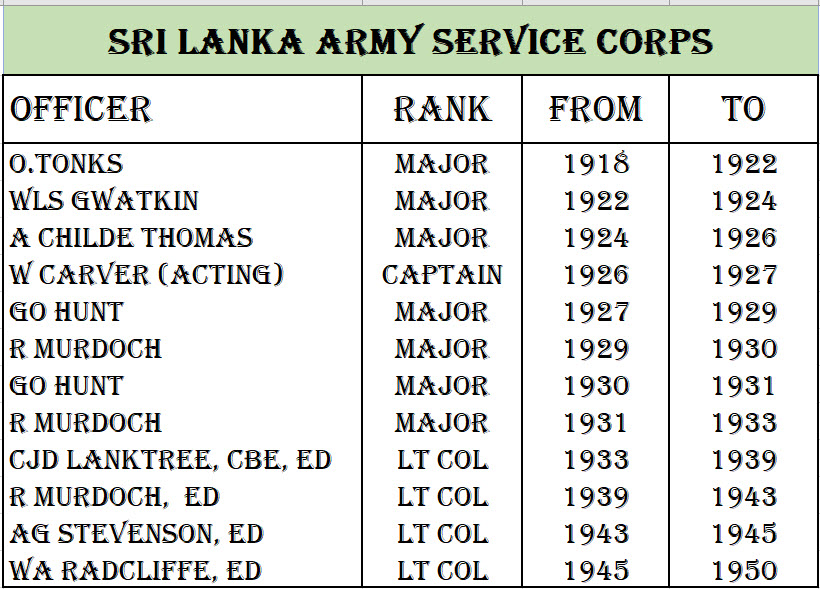
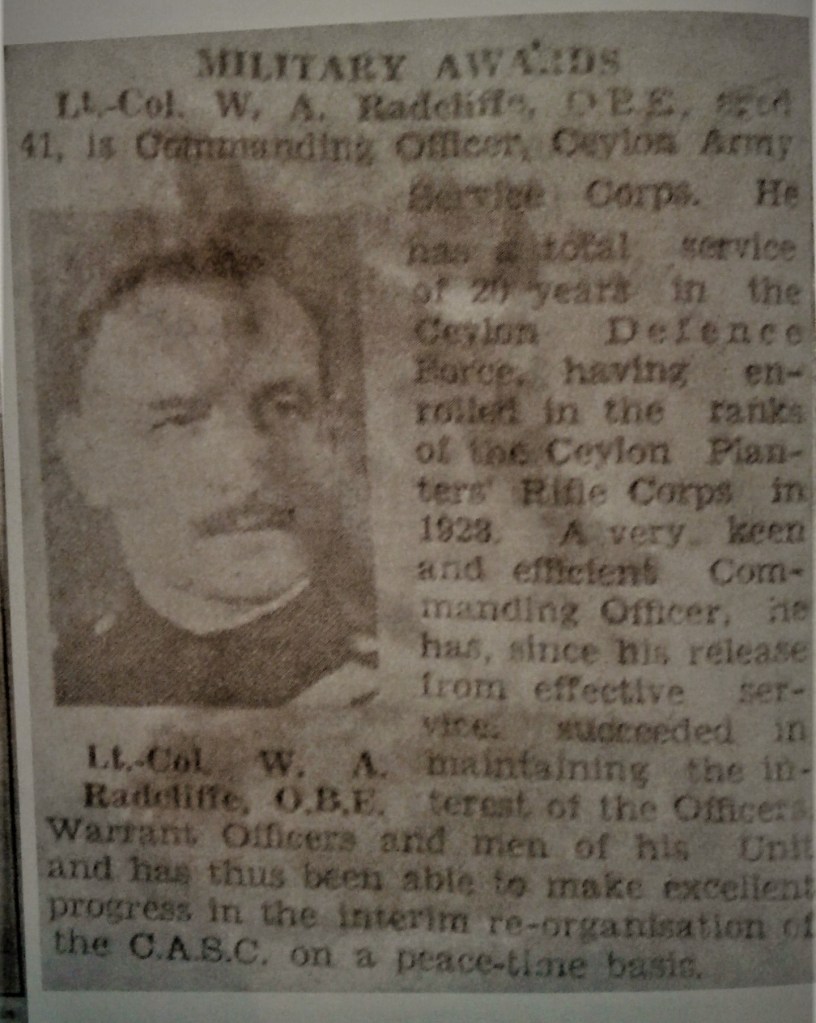
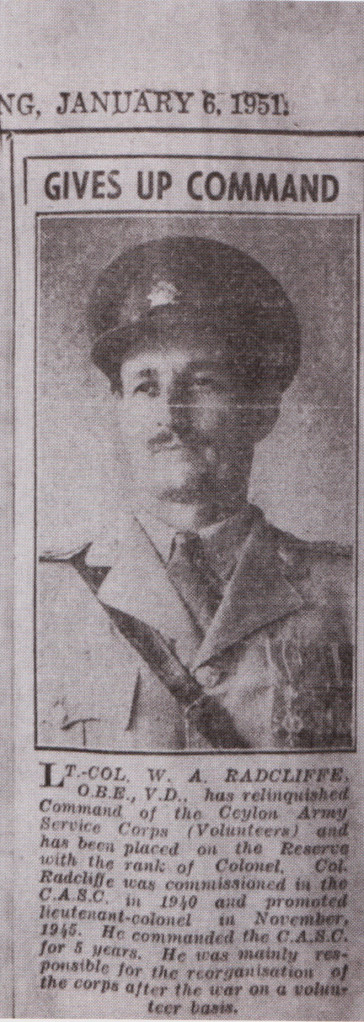
List of British Commanding Officers of CS&T and CASC. COs from O. Tonks through R. Murdoch were WW1 veterans. The last British Commanding Officer was W.A. Radcliffe. He was succeeded by GLS Austin, the first Ceylonese Commanding Officer.

Departure of Last British Commanding Officer
Death of The Last British Officer to have Served with the Ceylon Army Service Corps

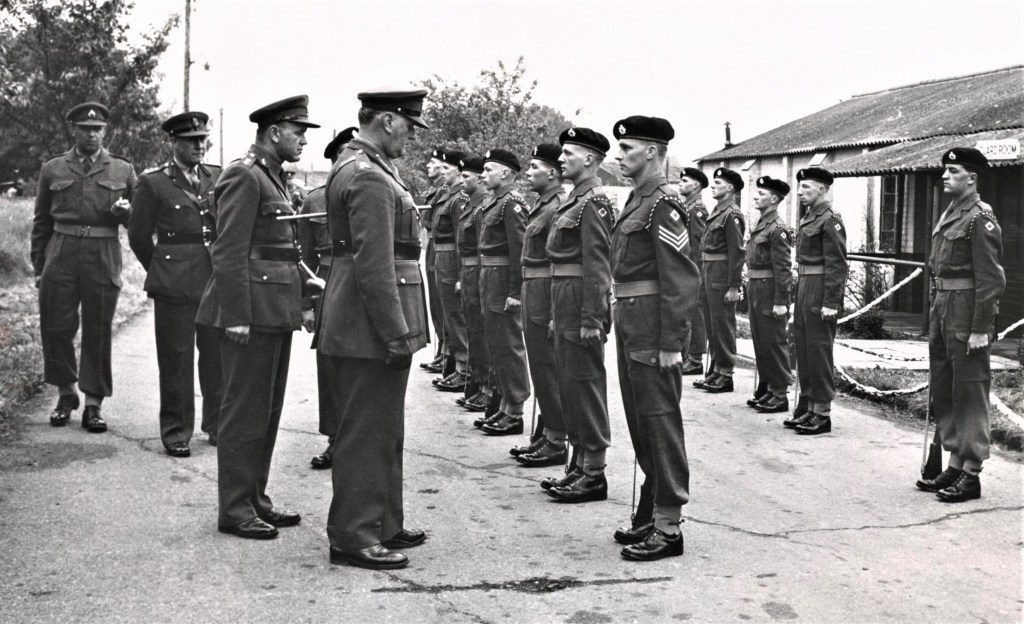


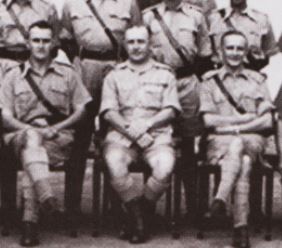
Major-General Alexander Frederick Joseph “AFJ” Elmslie, C.B., C.B.E. served as the CASC Adjutant in the 1930s. Remarkably he passed away in 2005 at the age of 100 after a distinguished career spanning 40 years in the British Army
Born: 31st of October 1905
Died: 13th of September 2005
Service
1932 to 1935: Adjutant Ceylon Supply and Transport Corps & Ceylon Army Service Corps
194x Deputy Director of Combined Operations, India
1953 – 1955 Deputy Director of Supplies & Transport, War Office
1956 – 1957 Director of Supplies & Transport Far East Land Forces
1957- Inspector of Royal Army Service Corps, War Office
1960- Retired
1960-65: Honorary Colonel 43rd Wessex Divisional Column RASC (Territorial Army)
Excerpt from The Times, September 29 2005
“Major General A.F.J. Elmslie: Dedicated logistics officer who began his career in an age when army transport still relied heavily on the horse Although he was known in the Royal Army Service Corps as “Uncle Fred”, Elmslie’s approach to subordinates was seldom entirely avuncular. He was a man with an eye for the more amusing aspects of service life, but also one who set and demanded the highest professional standards, for he knew that movement and supply of the fighting troops depended on how well his own units performed. When he was commissioned in 1925, most of them still depended on horses for pulling power. Alexander Frederick Joseph Elmslie was the son of Captain A. W. Elmslie of the Royal Army Education Corps. He was educated at Farnham Grammar School and RMC Sandhurst, from where he was commissioned directly into the RASC”
Side Note: In 1987, Maj Gen Elmslie sent 4 photographs of the CASC taken during his tenure to the British High Commission in Sri Lanka with instructions to pass these on to the Sri Lanka Army Service Corps. Instructions on the envelope read: “1 Retain in envelope until mid-Dec 1987. 2 If Sri Lanka ASC do not claim (by then), accede the photos to the UK Archive.” The UK Archive subsequently received the photos.
Additional Resources
British Garrison Command in 1918
https://drive.google.com/open?id=1dTlebNLe7-l8zE1O-tHXIcimk_TsVZXI
Ceylon Defence Force Organisation Structure and Details 1
https://drive.google.com/open?id=1j4ZS7EtU2H5Ut2_Nd8lGhfUjJdiBCTtS
Ceylon Defence Force Organisation Structure and Details 2
https://drive.google.com/open?id=1XGLBFn3W0h2O5SradRgq1XUQlAv2E3q2
Ceylon Defence Force Organisation Structure and Details 3
https://drive.google.com/open?id=17PmCZ-wizbBToaU-6M9LoD2GrRtVNxnw
 Sri Lanka Army Service Corps - CSC - ශ්රී ලංකා යුධ හමුදා සේවා බලකාය